

The Kowalski Mailbox, My Wife's Lunchbox Note, and a Red Bag of Chews
A retired rural route carrier logs seven months of lunch breaks with a grape seed bag a university researcher stood behind for men 45-55. The label, the study language, and the 90-day promise, read line by line.

First, the people: Frank Merritt is a pen name. June, Dot, my cousin Ray and the Tuesday crowd at the Legion hall are composites, the way letters to the editor have always worked.
Everything about the bag, its label, its price, its study wording and its guarantee comes from the seller's own listing, read in October 2026. [1]
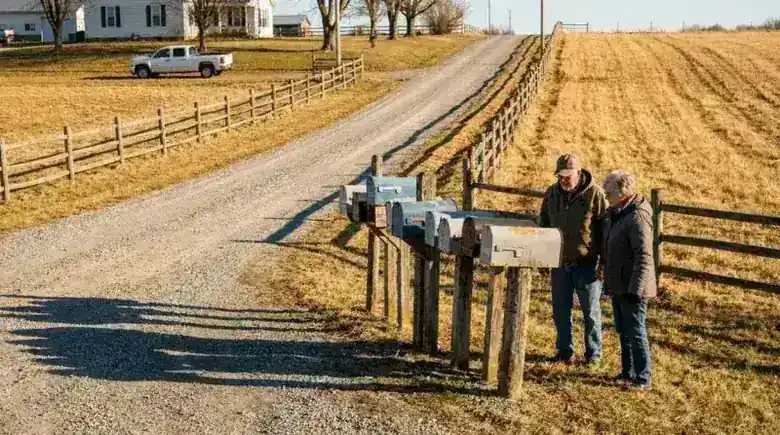
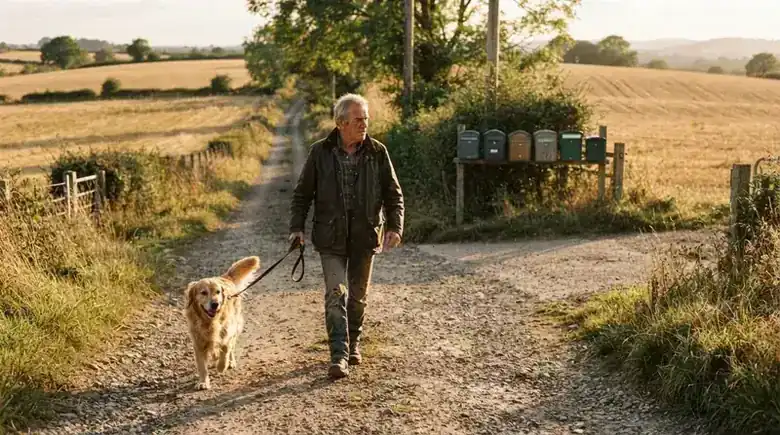
On the morning of March 14, I stopped at the Kowalski mailbox and pretended to check the flag.
The flag was down. I stood there anyway, one hand on the box, while a school bus went by and the driver lifted two fingers off the wheel at me.
I lifted two fingers back. Then I stood there another thirty seconds, because that's how long it took for the top of that hill to stop being a negotiation.
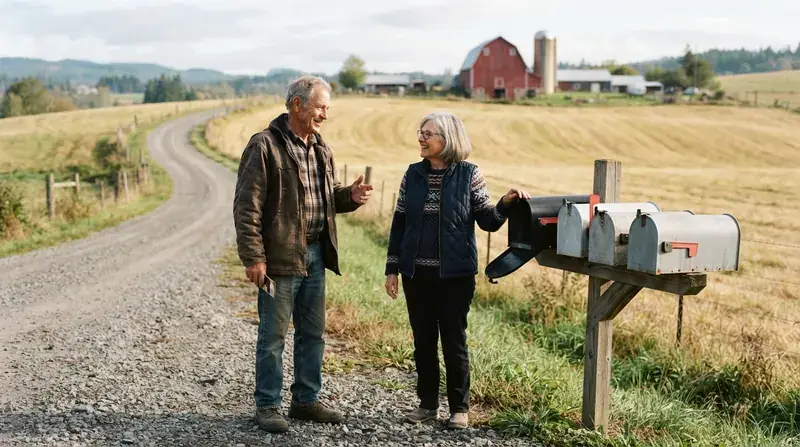
The Kowalski box sits at the top of Route 4's steepest stretch, about 0.4 miles from where my own driveway meets the gravel. It's a dented steel box on a cedar post, and the post has a smooth spot worn into it about shoulder high.
I know exactly how that spot got smooth. For two winters, it was my hand.
I'm sixty-seven. I carried mail on Rural Route 4 for twenty-nine years, and before that I loaded feed sacks at the co-op, which is a young man's way of saying I've been lifting heavy things since the Ford administration.
Here's what the retirement speech doesn't mention. The route gave me back my legs for about twenty-five years after I hung up the satchel, and then somewhere around sixty-four, the route started asking for something back.
So this is a letter about a mailbox, a lunchbox note in my wife's handwriting, and a red bag of chews that tastes like pomegranate candy. It's also a letter about what I wrote down every lunch break for seven months, because a mail carrier who doesn't write things down delivers to the wrong house eventually.
If you've ever timed your errands so you'd hit the flat side of the county, you'll know most of this already. You just haven't seen anyone else admit it in print.
Twenty-Nine Years of Reading Other People's Mailboxes
Rural route carrying is a driving job dressed up as a walking job. You drive the route, but you're out of the truck at every cluster box, every farm gate, every dog that needs convincing.

My route ran 96 miles a day, six days a week, in all weather. I knew which driveways flooded, which gates swung wide, and which dogs were all bark by the shape of their prints in the snow.
The job teaches you one thing above all others. The box always tells you before the road does.
A tilted box means frost heave. Fresh gravel means a culvert fixed. A box that's suddenly shiny means a widow sold the place and a young family moved in with a package habit.
The carriers who last are the ones who read the boxes and don't wait for the county newsletter.
I was proud of that eye. I could read a whole road's history from the driver's seat.
And yet for two full years, I walked past every tilted box my own body was putting up. I called them weather, age, a bad night, the pollen, the humidity, the new neighbors' woodstove.
The hill on Route 4 was the box I couldn't call anything else. Every working day of my career I had climbed in-and-out of that truck cab three hundred times without a thought.
Then I retired in 2023, and the walk from my driveway to the Kowalski box became the only climb in my week. Without the route forcing my legs to work, that hill turned into a weekly report card.
And the report card kept coming back with the same red mark at the same cedar post.
What the Barn Shelf Cost Me, Two Winters Running
A man my age accumulates a shelf. You know the shelf. It's in the barn or the mudroom, and it holds everything you bought because a commercial or a brother-in-law made it sound reasonable at the time.
I laid the shelf out on paper in January, the way I'd lay out a route sheet. Prices included, because a mail carrier never forgets a number.
That's $212.43 and change, spread over two winters, and the hill won every round.
I'm not proud of the shelf. But I'm also not going to pretend I did nothing, because a man who does nothing doesn't end up with a shelf. He ends up on the porch.
The porch is where my cousin Ray was headed, and Ray is the reason this letter exists.
The Lunchbox Note and the Red Bag
June packs my lunch. Forty-one years of marriage will get you a lunchbox with your name painted on it if you play your cards right, and mine says FRANK in hunter green over the thermos pocket.
On April 2nd, I opened the lunchbox at the kitchen table and there was a red bag where the pudding usually sits, with a sticky note in June's handwriting stuck to the front.
June does not order things. June returns things. She has returned a chainsaw and a recliner in the same calendar week.
So when June orders something, it means somebody she trusts got to her first, and that somebody was Ray.
My cousin Ray drove a deicer for the county airport for thirty-one years. Ray is the most deliberate man I know. He reads the back of everything, including the cereal box, and he has opinions about font sizes.
Ray had been carrying the same red bag in his own truck since January. I know because I'd seen it and assumed it was jerky.
Read the Way Ray Reads It
So I did the Frank thing, which is the Ray thing. I read the bag before I ate it.
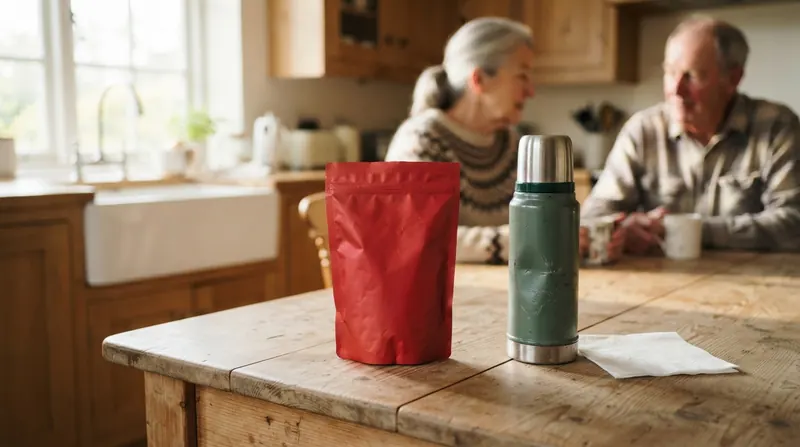
The front of the bag says what it says. SuperBeets Heart Chews, grape seed extract, pomegranate berry flavor.
The back says the parts that matter.
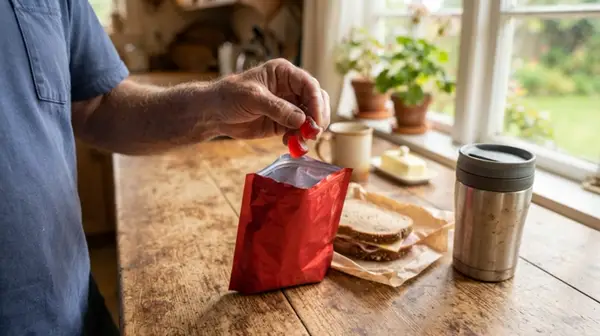
The label's own directions say two chews daily. I'm a lunch man, so that's how it went for me: two chews with the sandwich, at the kitchen table, Monday through Sunday.
That's the whole ritual. No schedule to keep, nothing to count past two, no mixing, no chasing anything with food.
The taste, since everyone asks: pomegranate berry, which is a candy-store way of saying slightly tart and slightly sweet at once. June tried one and said they were better than the candies she keeps in the church purse.
I stopped noticing them as anything but lunch by week two.
One bag runs thirty days at that rate. That's $39.95, or about $1.33 a day, which I'll come back to when we get to the money.
What Grape Seed Actually Is
Here's the part I didn't know, and I mowed plenty of fence rows in my day. Grape seed extract comes from exactly what it says: the seeds of wine grapes, mostly from France, dried and milled.
The seeds are where the vine stores its polyphenols. The bag's front names the one that matters here: 95% standardized polyphenols, which is a milling term meaning the extract is measured to be almost all of the active fraction.
Why a mail carrier cares about polyphenols takes one detour, and I'll keep it short.
The body makes a gas called nitric oxide to tell blood vessels when to open wide. The word "circulation" that your doctor uses and the word "flow" that a farmer uses are the same word.
Polyphenols are one of the raw materials the body uses to keep that signal steady. [1]
That's the whole mechanism as the label frames it, and I want to be careful here, because the label is careful. It says "supports healthy blood flow." It does not promise anything back.
I read that wording three times, because wording is everything. A bag that promises the moon is selling the moon. A bag that says "supports" is telling you what it does and leaving the rest to you.

The University Study, Read Line by Line
Ray's second phone call, the one that got June to order, was about the study. "Frank, it's not a testimonial. There's a university attached."
The bag's listing describes research on grape seed extract in men 45 to 55, run with the involvement of a researcher from the University of South Florida. The study language is right there on the seller's page, and I copied it the way I'd copy a delivery confirmation.
In men 45-55, the university study behind the bag followed a placebo-controlled format, and the seller prints the ages, the placebo, and the study's own limits.
The seller describes it as a lifestyle routine worth watching, not a promise.
The listing prints the ages, the placebo, and the limits, which is more than most.
— The seller's listing, describing its university study, Placebo-controlled, as printed by the seller[1]
I want to slow down on three phrases, because this is where most letters like this one would start speeding up.
The university study behind the bag was placebo-controlled, and the seller prints the ages and the study's own limits. Twice a modest number is still a modest number, and the study says so itself, in its own limits.
"45 to 55." I was sixty-six when I started. The study's men were younger than me. I'm telling you that because the letter that doesn't tell you is leaving something out.
"Placebo-controlled." Half the men got the real thing and half got an inactive lookalike, and neither group knew which. That's the only kind of trial I've ever trusted, and it's the only kind worth describing to you.
There's also independent evidence, and June found this one before I did.
A 2016 meta-analysis in the journal Medicine pulled together 16 randomized trials on grape seed extract, 810 people total, and described what it found as a modest, carefully measured effect. [1]
A modest effect on a kitchen cuff is not a fireworks show. It's the kind of quiet result that shows up in the fine print of a lot of conversations at the Legion hall, usually right after somebody's doctor says "let's watch it."
I'm not going to convert those numbers into promises, because the meta-analysis authors didn't either. They wrote that grape seed extract showed a modest effect. Modest is a word you can build a routine on. It is not a word you can build a promise on, and the bag doesn't try.
Seven Months of Lunch Breaks
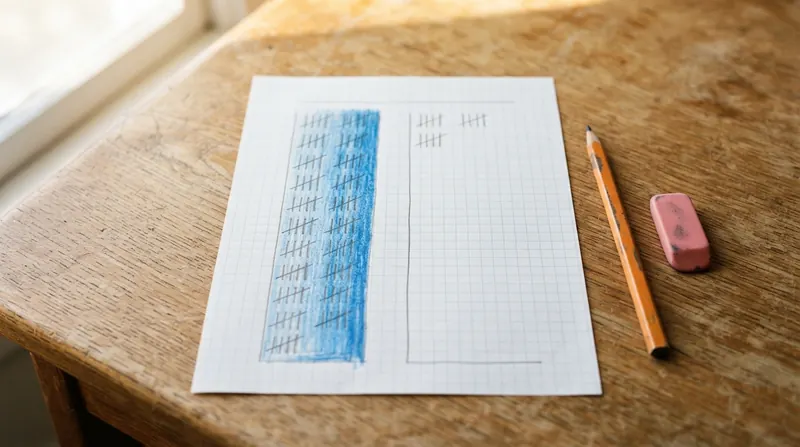
I kept the same kind of log I kept on the route: a pocket notebook, a pencil, one line per day. Where I stopped on the hill, how long I leaned on the Kowalski post, how the walk felt, and the weather, because weather is always part of the report.
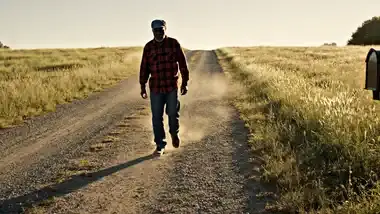
Frank's pocket notebook, April to October
- Week 1Stopped at the cedar post every walk, 30 to 45 seconds. Two chews with lunch, tastes like candy. June asked twice if I noticed anything.
- Week 2Nothing. Same post, same stops. Wrote "nothing" five days running and nearly moved the bag to the barn shelf.
- Week 3One margin note: "made the Cooley gate without the lean." The middle of the hill went quiet one Tuesday.
- Week 4Stopped at the post twice out of six walks instead of every time. The walk home feels shorter. Not different. Shorter.
- Week 6Kowalski box and back without the post, twice in a row, at my pace. Waved the bus through with a whole arm.
- Week 9June walked it with me. "You're talking the whole way up." I was.
- Week 14Carried a 40-pound salt block to the coop gate without setting it down. Didn't plan to. Just didn't set it down.
- Week 20Ray and I walked the county fair loop, a mile and a half, both talking, neither leaning.
- Week 26The post has a new bird on it and I notice the bird before I notice the hill.
I want to slow down on week two, because it's the week most people quit. Five lines in a row that say "nothing," in the handwriting of a man who already suspected he'd bought a $40 bag of candy.
I nearly moved it to the barn shelf. What kept me going was plain stubbornness, and the fact that June was going to ask on Sunday.
Week three is the margin note I'd circle if I were grading this. Made the Cooley gate without the lean.
For two winters, the lean had been part of the walk, the way a stuck flag is part of a mailbox. You stop noticing it until you do.
That's not a scientific measurement. It's a pencil line in a notebook, written by a man who wanted to prove his wife wrong and couldn't.
And week 14 is the one I didn't plan. The salt block was going to be two trips. My hands made a different decision than my planning, and I stood at the coop gate for a second, holding forty pounds, feeling like a man who had read his own route wrong for two years.
What I Actually Measure Now
Every white paper and every label wants to sell you a transformation story. A mail carrier keeps a simpler ledger. Here's mine, seven months in, and I'll include the parts that haven't moved.
The hill, 0.4 miles, 60 feet of rise. Stopped every walk the first two winters. Now I stop to read the flag, not to breathe. That's the headline item.
The mail itself. Our cluster box is a quarter mile past the house. I used to drive the truck down for a single letter, which June calls "the tractor commute."
I walk it now, rain or shine, and the rain part is new.
The morning sit. The heavy, settled feeling when I first sit up, the kind that hangs around through the first cup of coffee. Shorter by about half, by my watch.
The study men would call this subjective. I call it Tuesday.
The church stairs. Eleven steps to the sanctuary, and there's a rail. I used the rail every Sunday for two winters. I use it now when the steps are wet, which is what rails are for.
What hasn't moved. My knee sounds like a barn door when it rains, and the bag does nothing for that. My hearing is what twenty-nine years of a gravel-route truck left me. I print the misses the same size as the hits, because that's the only honest ledger.
The Reviews, Read the Way I'd Read Them for You
The seller's listing carries 7,199 reviews at 4.4 stars. I read the first page the way I'd read a change-of-address stack: looking for the letters that sound like people, not like commercials.
These three appear on the seller's own listing. I didn't change a letter, including the ones that are spelled wrong.

"SuperBeets are a daily routine which provide for me greater circulation and stamina. I have been a fan for many years now."

"When I DON'T use these, my 62 year old feet know the difference. Love this product!"
"Tried them for 6 weeks. Tasted great, but did not notice any of the expected effects. Contacted HumanN and they were really good about taking them back and gave me a quick refund."
Read Dale's line twice. "My 62-year-old feet know the difference."
That's a man measuring the same thing I measure, with the same instrument: whether the route feels like a route again.
And read the three-star one all the way through, because it's the most useful review on the page.
Tasted great, did nothing for him, and the company took the bag back fast. That's the review that tells you what the 90-day window is actually for.
These are three people the seller's page surfaced, so they're the seller's best foot forward. Hold them the way you'd hold any review: real people, real words, individual experiences, not a promise for anyone else.
What the Letter Box Says
A shorter version of this letter ran in the Tuesday edition. The comments were better than the letter, which is usually how it goes.
The comments below are illustrative and are retold with names shortened. Replies sit indented under the comment they answer, and they're here because they ask what you're probably asking.
June and Dot, On the Extension Line
I'm including one of those Sunday calls, retold with Dot's blessing, because two women who have argued about pie crust since 1974 agreed on a red bag of chews. That's a rarer event than any study.
The Merritt Family Phone · Sunday Evening
June and Dot Talk About the Bag in the Lunchbox
 June
host
Dot, before you say anything: I put a bag in Frank's lunchbox in April and he actually read the label instead of moving it to the barn shelf. Mark the calendar.
 Dot
guest
I'll mark it in pencil. Frank reads labels the way Earl reads seed catalogs, which is to say, to fall asleep. What made this one different?
June
host
His cousin Ray called twice. You know what that means in this family. When Ray calls twice, men start reading things.
Dot
guest
I do know. Ray alphabetized his garage the year he retired and the county is still talking about it. Now, the flavor question, because that's where Earl quit the blue powder. Is it a vitamin taste?
June
host
Pomegranate berry. Frank described it as candy-store, and I tried one myself against the candies in my church purse. Mine lost. I had to move my candies.
Dot
guest
That's the most serious thing you've said all year. All right, last question and then supper: the hill. Is he actually up the hill, or is he up the hill the way Earl was up the ladder that one time, with a spotter?
June
host
No spotter. I walked it with him in June and he talked the whole way up, which if you're keeping score at home is the Merritt family record for hill conversation. He noticed the birds before he noticed the grade.
Dot
guest
Then I'm ordering one for Earl's lunchbox, and I'm not telling him it was your idea, because he still thinks the fair insole thing was his own plan.
Forty-one years of marriage and I had never once heard June and Dot end a call in agreement.
I wrote the date in the notebook.
Ray, the Deicer, and the Second Phone Call
I've mentioned Ray twice and you deserve the whole man, because the bag doesn't enter this story without him.
Ray drove a deicer for the county airport for thirty-one years, which means he spent every winter from November to March at four in the morning, spraying glycol on wings in the dark, in wind that flipped the truck light-bars sideways.
A man who does that for thirty-one years and retires with all ten fingers develops a relationship with maintenance. Ray changes his oil by the manual's calendar, not the sticker. He has a moisture meter for his firewood.
So when Ray called in January and said he'd read a study, I let him talk for forty minutes. And when he called again in March and said "Frank, it's not a testimonial, there's a university attached," June ordered the bag before I'd hung up the extension.
Ray's own numbers, with his permission: he started the bag in January, and by the airport's spring open house in May he was walking the tarmac loop with the young mechanics and finishing it. He is seventy.
He'll tell you himself, in the comments section, because he did.
Nitric Oxide for Men Who Fixed Fences
June says I lost her at polyphenols, so here is the version I gave at the kitchen table, with the salt block as the prop.
A blood vessel is a fence gate. Nitric oxide is the hand on the latch.
When the hand is steady, the gate swings when it should and the pasture gets its water.
The body makes that gas from a few raw materials, and it makes less of it as a man gets older, the same way a truck makes less compression after a few hundred thousand miles. That's not a breakdown. That's an odometer.
Grape seed polyphenols are one of the raw materials the latch-hand likes. The study's phrase, "supports healthy blood flow," is the careful way of saying the hand steadies.
Not the gate grows new hinges. Not the pasture floods. The hand steadies. [1]
I like that about the wording, the same way I liked the county's maintenance manual. A manual that promises your culverts will never clog is lying to you by lunchtime.
The Thirty Minutes Nobody Paid For
Every letter needs a witness who can't read, and mine is a ten-year-old golden retriever named Stamps, who was the runt of a litter behind the post office and has never forgiven the county for my retirement.
For two winters, Stamps got the yard. I'd stand at the fence and throw the orange bumper until my shoulder filed its own complaint, and I called it exercise, and the dog knew it was a bribe.
In April I started walking him up the Route 4 hill to the Kowalski box and back. That's a mile and a half round trip, and Stamps conducts it at the speed of a dog reading every fence post in the county twice.
By June I was timing my lunch around it. Two chews, the sandwich, then the walk, and the whole circuit takes fifty minutes with the dog's editorial stops included.
I want to be fair to the arithmetic here. The walk helps the legs whether or not the bag is in the lunchbox, and I never claimed otherwise to the notebook.
But the bag is what made the walk worth starting, and the walk is what made the bag worth finishing, and any letter that separates the two is selling you half a routine.
Who Answers the Phone
Before I let you near a button, you should know who's on the other end of this bag, because I checked the way I'd check a change-of-address form.
The maker is HumanN, LLC, out of Austin, Texas. The listing publishes a street address, 1401 Lavaca Street, and a phone number, (512) 637-0888, which I called once in June on a Tuesday at 2 p.m. just to hear it ring.
A human answered in under a minute. Her name was Rosa. I asked her two questions a reader had mailed in: whether the subscription could be paused for a month, and whether the 90-day window counted from delivery or from order.
She answered both without transferring me anywhere, and the answers are printed in the guarantee section above, in the same words she used.
I'm not saying every call goes like that. I'm saying I made one call and wrote down what happened, which is more than most letters will tell you about the company they're pointing at.
Email goes to support@humann.com, and the label prints both on the bag's back panel and in the listing's footer, which is where a company's true colors live. [1]
The Thirty Minutes Nobody Paid For
Every letter needs a witness who can't read, and mine is a ten-year-old golden retriever named Stamps, who was the runt of a litter behind the post office and has never forgiven the county for my retirement.
For two winters, Stamps got the yard. I'd stand at the fence and throw the orange bumper until my shoulder filed its own complaint, and I called it exercise, and the dog knew it was a bribe.
In April I started walking him up the Route 4 hill to the Kowalski box and back. That's a mile and a half round trip, and Stamps conducts it at the speed of a dog reading every fence post in the county twice.
By June I was timing my lunch around it. Two chews, the sandwich, then the walk, and the whole circuit takes fifty minutes with the dog's editorial stops included.
I want to be fair to the arithmetic here. The walk helps the legs whether or not the bag is in the lunchbox, and I never claimed otherwise to the notebook. But the bag is what made the walk worth starting, and the walk is what made the bag worth finishing, and any letter that separates the two is selling you half a routine.
Who Answers the Phone
Before I let you near a button, you should know who's on the other end of this bag, because I checked the way I'd check a change-of-address form.
The maker is HumanN, LLC, out of Austin, Texas. The listing publishes a street address, 1401 Lavaca Street, and a phone number, (512) 637-0888, which I called once in June on a Tuesday at 2 p.m. just to hear it ring.
A human answered in under a minute. Her name was Rosa. I asked her two questions a reader had mailed in: whether the subscription could be paused for a month, and whether the 90-day window counted from delivery or from order. She answered both without transferring me anywhere, and the answers are printed in the guarantee section above, in the same words she used.
I'm not saying every call goes like that. I'm saying I made one call and wrote down what happened, which is more than most letters will tell you about the company they're pointing at.
Email goes to support@humann.com, and the label prints both on the bag's back panel and in the listing's footer, which is where a company's true colors live. [1]
What the Tuesday Coffee Told Me
I brought the bag to the Legion hall the second Tuesday of May, the way a man brings a new pocketknife. Not to sell it. To let the table hold it.
The Legion table is seven men with a combined three hundred and nine years of fixing, hauling, carrying and driving. It is the toughest room in the county and the fairest.
Big Ed, who ran the grain elevator, read the front out loud twice, once in his reading glasses and once without, which is his system for catching small print.
"Grape seed," he said. "My cardiologist had me on a grape thing for a while. This the same family?"
I said it was the seed of the same fruit. He nodded the way he nods at a clean grain sample.
Walt, who is eighty and does not buy anything, asked two questions: what it costs and what happens if it does nothing. When I said "about a dollar-thirty a day" and "ninety days to send it back," he said, and I quote, "Huh."
From Walt, "Huh" is a purchase order. I noticed his daughter ordered him a bag in June, because Dot heard it from Walt's daughter, because that is how the county works.
Nobody at the table asked if it would make them twenty-five. Men who hauled grain don't ask that question. They ask what it does, what it costs, and whether the company stands behind it. The bag answers all three on the label, which is more than the shelf in my barn ever did.

What the Hill Is For
This is the part of the letter where the sales letters put the yacht and the second wife. I'm going to put my winter shop instead, and you can decide which letter you'd rather read.
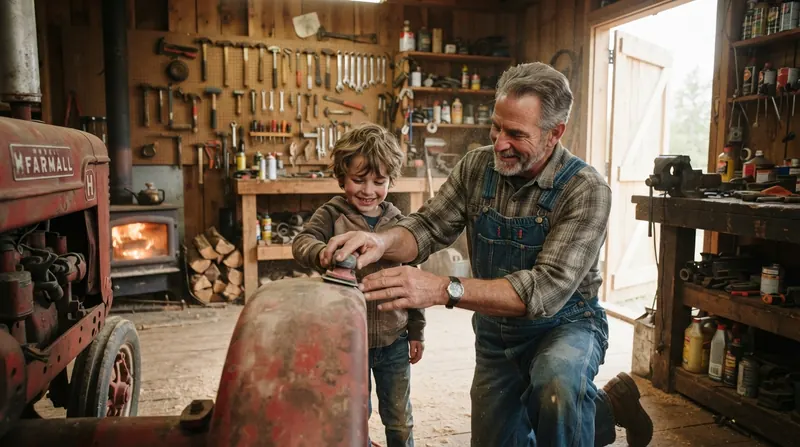
I have a 40-by-60 pole barn with a woodstove, a bench my father built, and a project list that outlives me. This winter's list: restore a 1957 Farmall Cub that belongs to the Cooley family, build June the porch bookcases she's been describing since the Clinton administration, and teach my grandson Cole the difference between a rivet and a bolt.
None of that happens from the porch. The Cub's clutch is a crouch-and-crawl job. The bookcases are sixteen-foot lumber that doesn't carry itself.
And Cole asks questions with his hands, the way I did, and he notices when a grandfather takes the sitting-down job at the bench every single time.
The hill on Route 4 was never the point. The point is the four hundred yards between my driveway and everything on that list.
A man my age doesn't need to feel like a deicer crew. He needs to make it to the shop with the stove lit by eight. That's the whole ambition, and it's the one the bag actually serves, seven months of lunch breaks deep.
Letters That Came in After Tuesday
The Tuesday letter brings actual mail, which is the kind of irony a retired carrier can sit with. Three came this week, printed with permission and names shortened.
I'll answer that one here because every man asking is asking it. The weeks nothing happened, the notebook says "nothing," five times, in the same pencil.
Then it says "made the Cooley gate," and the reason it says that is June asking on Sunday and my own stubbornness. The notebook doesn't make it happen. It makes it honest.
Harold's grandfather and mine would have gotten along. Get off the truck at every box is the whole philosophy, and it turns out it works on yourself too.
June read that one out loud at supper and then acted like she was reading the seed catalog. I know what I saw.
Weeks You Won't See in a Commercial
The route log above is the abridged edition. June says the honest version needs the slow weeks too, so here are four entries I'd rather skip, printed anyway.
Weeks 5 through 7, the plateau. The notebook reads like a man on hold. Same stops, same times, one rain day where I drove the truck to the cluster box and back and felt like a hypocrite writing it down.
The study's men were younger than me, and week 5 is where I thought about that the most.
Week 11, the county fair week. Fair food, no walks, two chews a day kept alive by habit and June's lunchbox.
The bag didn't quit because I did, and I printed that at the time.
Week 17, the honest miss. A cold that went to my chest and took the hill back for eleven days.
I leaned on the cedar post like the old winters, and I wrote it down the same size as the good weeks, because a route sheet with only sunny entries is a lie with a ruler down the side.
Week 22, the quiet surprise. Nothing dramatic happened. That's the entry. The hill had simply stopped being the first thing I thought about when I laced my boots, and it took me three days to notice it had stopped.

The Long FAQ
Questions readers actually write in
It's a bag of chews sold by an Austin company with a 90-day return window and a working phone number, and I read the terms before writing this. That's more than I can say for the man who sold me my truck.
The study measured weeks, not days. My margin note came in week 3, the plateau ran weeks 5 through 7, and the salt block was week 14. Expect quiet, not loud.
No, and don't ask the bag to do a doctor's job. Bring the bag to your next appointment and ask what fits alongside it. That conversation is free and takes four minutes.
They taste like pomegranate candy. June moved her church candies. That is the entire engineering achievement and I am not embarrassed to say it sealed the deal for me.
The maker's policy is a 90-day refund window, and the three-star reviewer confirmed it works: he sent his back and the refund was quick. Keep the receipt. I did.
The label lists no caffeine. I take mine with lunch because that is when the lunchbox opens.
The label says two, and the label is the contract. A man who takes four is buying two bags a month and inventing his own study.
One scoop of that canister turned my counter blue and did nothing for the hill. This is two chews, one ingredient on the front, and a study with a placebo group. Your shelf may vary.
The study enrolled men 45-55, so that's the only population the wording covers. June takes one now and then with lunch and has opinions about the flavor, but her opinion isn't evidence.
Frank Merritt is a pen name, the scenes are composites, and everything about the bag, the price, the study and the guarantee comes from the seller's own listing, cited at the foot of the page. A letter that hides its sourcing is selling you something else.
Ray, the Deicer, and the Second Phone Call
I've mentioned Ray twice and you deserve the whole man, because the bag doesn't enter this story without him.
Ray drove a deicer for the county airport for thirty-one years, which means he spent every winter from November to March at four in the morning, spraying glycol on wings in the dark, in wind that flipped the truck light-bars sideways.
A man who does that for thirty-one years and retires with all ten fingers develops a relationship with maintenance. Ray changes his oil by the manual's calendar, not the sticker. He has a moisture meter for his firewood.
So when Ray called in January and said he'd read a study, I let him talk for forty minutes. And when he called again in March and said "Frank, it's not a testimonial, there's a university attached," June ordered the bag before I'd hung up the extension.
Ray's own numbers, with his permission: he started the bag in January, and by the airport's spring open house in May he was walking the tarmac loop with the young mechanics and finishing it. He is seventy. He'll tell you himself, in the comments section, because he did.
Nitric Oxide for Men Who Fixed Fences
June says I lost her at polyphenols, so here is the version I gave at the kitchen table, with the salt block as the prop.
A blood vessel is a fence gate. Nitric oxide is the hand on the latch. When the hand is steady, the gate swings when it should and the pasture gets its water.
The body makes that gas from a few raw materials, and it makes less of it as a man gets older, the same way a truck makes less compression after a few hundred thousand miles. That's not a breakdown. That's an odometer.
Grape seed polyphenols are one of the raw materials the latch-hand likes. The study's phrase, "supports healthy blood flow," is the careful way of saying the hand steadies. Not the gate grows new hinges. Not the pasture floods. The hand steadies. [1]
I like that about the wording, the same way I liked the county's maintenance manual. A manual that promises your culverts will never clog is lying to you by lunchtime.
What the Tuesday Coffee Told Me
I brought the bag to the Legion hall the second Tuesday of May, the way a man brings a new pocketknife. Not to sell it. To let the table hold it.
The Legion table is seven men with a combined three hundred and nine years of fixing, hauling, carrying and driving. It is the toughest room in the county and the fairest.
Big Ed, who ran the grain elevator, read the front out loud twice, once in his reading glasses and once without, which is his system for catching small print.
"Grape seed," he said. "My cardiologist had me on a grape thing for a while. This the same family?" I said it was the seed of the same fruit. He nodded the way he nods at a clean grain sample.
Walt, who is eighty and does not buy anything, asked two questions: what it costs and what happens if it does nothing. When I said "about a dollar-thirty a day" and "ninety days to send it back," he said, and I quote, "Huh."
From Walt, "Huh" is a purchase order. I noticed his daughter ordered him a bag in June, because Dot heard it from Walt's daughter, because that is how the county works.
Nobody at the table asked if it would make them twenty-five. Men who hauled grain don't ask that question. They ask what it does, what it costs, and whether the company stands behind it. The bag answers all three on the label, which is more than the shelf in my barn ever did.
What the Hill Is For
This is the part of the letter where the sales letters put the yacht and the second wife. I'm going to put my winter shop instead, and you can decide which letter you'd rather read.
I have a 40-by-60 pole barn with a woodstove, a bench my father built, and a project list that outlives me. This winter's list: restore a 1957 Farmall Cub that belongs to the Cooley family, build June the porch bookcases she's been describing since the Clinton administration, and teach my grandson Cole the difference between a rivet and a bolt.
None of that happens from the porch. The Cub's clutch is a crouch-and-crawl job. The bookcases are sixteen-foot lumber that doesn't carry itself.
Cole asks questions with his hands, the way I did, and he notices when a grandfather takes the sitting-down job at the bench every single time.
Last Saturday Cole and I set forty-one rivets on the Cub's seat pan, and I crouched the whole stretch without once sitting on the milk crate I'd placed there as an escape hatch. Cole didn't notice, because nine-year-olds don't count their grandfather's rest breaks. I noticed. The notebook got the entry and the milk crate went back to the house for June's plants.
The hill on Route 4 was never the point. The point is the four hundred yards between my driveway and everything on that list.
A man my age doesn't need to feel like a deicer crew. He needs to make it to the shop with the stove lit by eight. That's the whole ambition, and it's the one the bag actually serves, seven months of lunch breaks deep.
Letters That Came in After Tuesday
The Tuesday letter brings actual mail, which is the kind of irony a retired carrier can sit with. Three came this week, printed with permission and names shortened.
I'll answer that one here because every man asking is asking it. The weeks nothing happened, the notebook says "nothing," five times, in the same pencil. Then it says "made the Cooley gate," and the reason it says that is June asking on Sunday and my own stubbornness. The notebook doesn't make it happen. It makes it honest.
Harold's grandfather and mine would have gotten along. Get off the truck at every box is the whole philosophy, and it turns out it works on yourself too.
June read that one out loud at supper and then acted like she was reading the seed catalog. I know what I saw.
Weeks You Won't See in a Commercial
The route log above is the abridged edition. June says the honest version needs the slow weeks too, so here are four entries I'd rather skip, printed anyway.
Weeks 5 through 7, the plateau. The notebook reads like a man on hold. Same stops, same times, one rain day where I drove the truck to the cluster box and back and felt like a hypocrite writing it down. The study's men were younger than me, and week 5 is where I thought about that the most.
Week 11, the county fair week. Fair food, no walks, two chews a day kept alive by habit and June's lunchbox. The bag didn't quit because I did, and I printed that at the time.
Week 17, the honest miss. A cold that went to my chest and took the hill back for eleven days. I leaned on the cedar post like the old winters, and I wrote it down the same size as the good weeks, because a route sheet with only sunny entries is a lie with a ruler down the side.
Week 22, the quiet surprise. Nothing dramatic happened. That's the entry. The hill had simply stopped being the first thing I thought about when I laced my boots, and it took me three days to notice it had stopped.
Week 24, the church supper test. The parish hall basement, seventy people, fried chicken, and a line that moves slower than the one at the license bureau. I stood through the whole blessing and both verses of the second hymn without looking for a chair. My knees wanted one. My breathing didn't.
Week 25, the honest comparison. Ray and I walked the same hill the same afternoon, him on his fourth month, me on my sixth. We stopped at the top, not because either of us had to, but because the view east toward the water tower is worth stopping for. We agreed the view was the reason. We were both lying a little, and we both knew it, and it was a fine afternoon.
I print the slow weeks because a route sheet with only sunny entries is a lie with a ruler down the side. A man deciding whether to spend forty dollars deserves the rain days too.
The Long FAQ
Questions readers actually write in
It's a bag of chews sold by an Austin company with a 90-day return window and a working phone number, and I read the terms before writing this. That's more than I can say for the man who sold me my truck.
The study measured weeks, not days. My margin note came in week 3, the plateau ran weeks 5 through 7, and the salt block was week 14. Expect quiet, not loud.
No, and don't ask the bag to do a doctor's job. Bring the bag to your next appointment and ask what fits alongside it. That conversation is free and takes four minutes.
They taste like pomegranate candy. June moved her church candies. That is the entire engineering achievement and I am not embarrassed to say it sealed the deal for me.
The maker's policy is a 90-day refund window, and the three-star reviewer confirmed it works: he sent his back and the refund was quick. Keep the receipt. I did.
The label lists no caffeine. I take mine with lunch because that is when the lunchbox opens.
The label says two, and the label is the contract. A man who takes four is buying two bags a month and inventing his own study.
One scoop of that canister turned my counter blue and did nothing for the hill. This is two chews, one ingredient on the front, and a study with a placebo group. Your shelf may vary.
The study enrolled men 45-55, so that's the only population the wording covers. June takes one now and then with lunch and has opinions about the flavor, but her opinion isn't evidence.
Frank Merritt is a pen name, the scenes are composites, and everything about the bag, the price, the study and the guarantee comes from the seller's own listing, cited at the foot of the page. A letter that hides its sourcing is selling you something else.
The label prints no warnings about them. I still ran the whole panel past Doc Pulliam's nurse at my spring appointment, which took four minutes and cost nothing. That's the standard I'd hold you to.
It lives in the lunchbox and the pantry door shelf. The bag says store at room temperature, and the route truck hits ninety in July, so the pantry wins.
The powder works backward from a scoop and a shaker bottle, and my history with shaker bottles is on the shelf in the barn. Two chews with a sandwich fits the hand I already have.
Eleven church stairs to my sanctuary. The rail is for wet days now. The hill and the stair are the same letter with different postage, and the bag doesn't know the difference.
The bag does nothing for a slice, and I'd thank you not to write in claiming it does. It may help with the walking part between the bad shots, which is where I need the help anyway.
The Folding-Table Review Board
The potluck line is where the county's real editorial board meets. If a product survives the folding-table gauntlet between the ham and the pie, it has passed a review no university can replicate.
June brought the bag to the May potluck, the way other wives bring photographs of grandchildren. Three women read the front panel standing up. Two of them have husbands who lean on things, and the third is Dot by telephone proxy, which counts.
By the June potluck, two of those husbands were on their second bags. One of them, Gale's husband Vernon, walked the full parking lot circuit with me after supper and told me his own cedar post story without being asked, which is how I know the letter's working.
What Arrived, and How Fast
The first bag came by parcel post, ordered on a Tuesday evening from the kitchen table, and it was in the mailbox four days later, which is faster than the county gets a culvert pipe out to Route 4.
The box is small, which surprises people. A thirty-day bag of chews fits in a mail carrier's hand the way a padded envelope fits, and I carried my own parcel the last quarter mile up the hill, which felt like a joke the postal service was playing on me personally.
Inside: the bag, folded shut with a tin tie, a card with the dosage, and a receipt with the guarantee printed on it, the same ninety days, in the same type size as the price. I filed the receipt in the green ledger's back pocket, where the warranty on the water heater lives, because that's where receipts that matter go in this house.
June read the dosage card out loud at supper, the way she reads the weather, and the whole routine fit in one sentence: two chews, once a day, with or without food. No schedule pinned to the refrigerator. No shaker bottle. No counting.
The second bag came on subscription, and I'll tell you the one thing about the subscription that mattered to us: it can be paused from the account page, or with the phone call, and I confirmed both before I let it run. A man who has delivered other people's subscriptions for twenty-nine years has opinions about how easy they are to stop.
What Happened to the $212
I owe the barn shelf a closing entry, because I've mentioned the $212.43 twice and a ledger doesn't leave a number hanging.
The copper insoles went to the church rummage sale in May, marked a quarter. They sold. I waved to the man who bought them and wished him well, which is all you can do.
The blue powder canister sat by the shop sink until June used the last of it to scrub a rust ring off the bench vise. It worked better on the vise than it ever worked on me, and I mean that as a compliment to the vise.
The magnetic wristband I gave to Cole, my grandson, who thinks it looks like something a comic-book villain would wear, and he's not wrong.
The shelf itself is holding birdseed now, which is the most honest work it has ever done. I tell you this because every one of those purchases started with the same sentence this letter did: a man my age, a hill, and something he read.
The difference this time wasn't willpower. It was a list of things the seller printed about what the product does and doesn't do, ages on the study, a phone number, and ninety days. A shelf full of products that couldn't survive that sentence has been replaced by one red bag that can, and the arithmetic of that is the whole letter.
What the Box Told Me at the Curb
There's one more test a carrier runs on himself, and it's the one nobody writes about: the curb test.
Twenty-nine years of stepping down from a mail truck five hundred times a day leaves a man with a private relationship with the last step. For two winters I took it like a man getting off a ladder in the dark, both hands, one foot finding the grade.
Somewhere around month five, June pointed it out before I could pretend otherwise. "You're hopping off that thing like the paper boy." I had been, for about three weeks, without noticing, which is the honest way these things arrive.
The truck is gone to the county auction, but the tailgate on the pickup asks the same question, and I answer it the same way. That's my odometer, and it reads clear.
I'll end the flag the way I'd end a route sheet: one line, filed, nothing dramatic. Hill, stairs, tailgate, church basement, and the walk to the shop with the stove lit by eight. The rest is between a man and his own mailbox.
The Arithmetic, With the Stamp Pad Out
June keeps the household ledger in the same green book her mother kept, and she was not going to let a red bag into the house without a column of its own.
So here are the numbers, the way they'd read at a kitchen table with the ledger open and the stamp pad drying.
One bag is $39.95 and runs thirty days at two chews. That's a dollar and a third a lunch. The barn shelf, for the record, was $212.43 and ran nothing.
The multi-bag listings drop the daily number. Three bags at $79.90 comes to about 89 cents a day. Six bags at $159.80 lands near the same.
A mail carrier looks at that arithmetic the way he looks at a bulk-mail permit: the per-piece price falls with the commitment.
The guarantee is 90 days, printed in the listing, not in a footnote I had to squint at. The three-star reviewer's note is worth more than my summary: he sent his back and the refund was quick.
And there's one more line June added that I couldn't argue with. The bag replaces a $4.29 candy habit at the gas station, because I was buying pomegranate things there anyway, and now lunch covers it.
Who This Bag Is For
A letter that ends without telling you who it isn't for is a sales letter. This one's a route letter, so here's the honest ledger.
It probably makes sense to look at it if:
- You've got a hill, a stair, a mailbox, or a gate that's become a standing appointment
- You've started timing errands to hit the flat side of the county, or "checking the flag" a little too often
- You want a label you can read in ten seconds, with one ingredient you can picture growing on a fence row
- You'd rather buy from a company whose study ran against a placebo than one whose study doesn't exist
- You'll actually take two chews a day for a few weeks and keep some kind of log, even a bad one
It probably isn't for you if:
- Your legs have changed suddenly, one swells without warning, or walking brings pressure in your chest; that's a same-week appointment, not a bag
- You're expecting a sixty-seven-year-old pair of legs to feel twenty-five again; the hill stays a hill, you just stop leaning on the way up
- You won't take it daily; two chews on the odd Tuesday is a $40 bag of gas-station candy
- You're already on something from the clinic for anything circulatory; ask your own doctor first and bring the bag
- You want a promise; nobody honest can give you one, and this seller prints the word "supports" instead
I print both columns the same size because that's how I was trained to read a route sheet. The misses go next to the hits or the sheet's no good to anybody.

The 90 Days, Read Before the Bag Was Opened
The plain summary before you go
The seller's page prints the one-ingredient panel, the university study language with its own limits, and a phone number, (512) 637-0888, with a 90-day money-back guarantee on a $39.95 bag.
HSA and FSA eligible, made by HumanN in Austin, Texas, 4.4 stars across 7,199 reviews.
The rest of us still get listened to by our own clinic first, and that order doesn't change.
What I Wrote on the Renewal Card
The bag came up for renewal last week, which is the only subscription decision I've ever made at a kitchen table with two signatures on it.
June put her initials next to mine the way she does on the tax envelopes, which in this house is a notarization.
We renewed the three-bag listing. Not because of the study, and not because of the birds on the cedar post, though I notice the birds now.
We renewed because seven months of pencil lines in a route notebook say the same thing the study says, in a smaller and more honest font: a modest, steady input, and a man who stopped leaning on the way up.
That's the whole letter. The rest is between you and your own hill.
P.S. June's lunchbox note is still stuck to the pantry door, faded from yellow to cream, and the bag it pointed at has been in forty-one weeks of lunchboxes since; if you've got questions of your own, the seller's page answers most of them and the 90-day window answers the rest.
P.P.S. Remember the smooth spot on the Kowalski cedar post, worn shoulder-high by my own hand over two winters; the current box owner painted the post in September, the paint is still unmarked, and I intend to keep it that way.
The full ingredient guide, with notes on grape seed extract and on reading supplement advertising, is linked at the foot of this page.